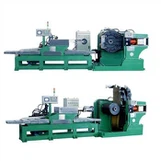
Hey there! As a supplier of V-belt Vulcanizers, I've seen firsthand how crucial it is to achieve a stable vulcanization effect. A stable vulcanization process ensures that V-belts are of high quality, durable, and perform well in various applications. In this blog, I'll share some tips on how to make the vulcanization effect of a V-belt Vulcanizer more stable.
Understanding the Basics of Vulcanization
Before we dive into the tips, let's quickly go over what vulcanization is. Vulcanization is a chemical process that involves heating rubber with sulfur or other curatives to cross-link the polymer chains. This cross-linking makes the rubber stronger, more elastic, and resistant to heat, abrasion, and chemicals. In the case of V-belts, vulcanization is used to bond the different layers of the belt together and give it the necessary strength and flexibility.
1. Proper Machine Selection
The first step in achieving a stable vulcanization effect is to choose the right V-belt Vulcanizer. Different machines have different capabilities and features, so it's important to select one that is suitable for your specific needs. Consider factors such as the size and type of V-belts you'll be producing, the production volume, and the level of automation you require.
For example, if you're producing large quantities of V-belts, you might want to consider a Rotocure Machine. These machines are designed for high-volume production and can provide consistent vulcanization results. On the other hand, if you're producing smaller batches or custom V-belts, a more manual or semi-automatic vulcanizer might be a better option.
2. Maintenance and Calibration
Regular maintenance and calibration of your V-belt Vulcanizer are essential for achieving a stable vulcanization effect. Over time, the machine's components can wear out, and its performance can degrade. By performing routine maintenance tasks such as cleaning, lubricating, and replacing worn parts, you can ensure that the machine operates at its optimal level.
Calibration is also important to ensure that the machine is heating and applying pressure accurately. Incorrect temperature or pressure settings can result in uneven vulcanization, which can lead to weak spots in the V-belts. Make sure to follow the manufacturer's instructions for calibration and perform it regularly to maintain consistent results.
3. Quality of Raw Materials
The quality of the raw materials used in the vulcanization process has a significant impact on the final product. Using high-quality rubber compounds, fabrics, and other materials can help ensure a more stable vulcanization effect. Inferior materials may contain impurities or have inconsistent properties, which can affect the cross-linking process and lead to poor-quality V-belts.
For example, using a Fabric Dipping Machine to properly treat the fabric can improve its adhesion to the rubber and enhance the overall strength of the V-belt. Additionally, make sure to store the raw materials in a proper environment to prevent degradation before use.
4. Temperature and Pressure Control
Temperature and pressure are two critical factors in the vulcanization process. Maintaining a consistent temperature and pressure throughout the vulcanization cycle is essential for achieving a stable vulcanization effect. Fluctuations in temperature or pressure can cause uneven cross-linking, which can result in V-belts with inconsistent properties.
Most modern V-belt Vulcanizers are equipped with temperature and pressure control systems that allow you to set and monitor these parameters accurately. Make sure to follow the recommended temperature and pressure settings for the specific rubber compound and V-belt design you're using. Additionally, use a reliable temperature and pressure sensor to ensure that the actual values match the set values.
5. Vulcanization Time
The vulcanization time is another important factor that affects the quality of the V-belts. If the vulcanization time is too short, the rubber may not fully cross-link, resulting in a weak and brittle belt. On the other hand, if the vulcanization time is too long, the rubber may over-cure, which can also lead to a decrease in the belt's performance.
The optimal vulcanization time depends on several factors, including the type of rubber compound, the thickness of the V-belt, and the temperature and pressure settings. It's important to conduct tests and experiments to determine the ideal vulcanization time for your specific application. Once you've established the correct time, make sure to follow it consistently for each batch of V-belts.
6. Operator Training
Even with the best equipment and raw materials, the skill and knowledge of the operator can have a significant impact on the vulcanization process. Proper training is essential to ensure that the operator understands how to operate the V-belt Vulcanizer correctly, set the appropriate parameters, and handle any issues that may arise.


Provide comprehensive training to your operators on the operation, maintenance, and safety procedures of the V-belt Vulcanizer. Encourage them to ask questions and provide feedback to continuously improve the vulcanization process. A well-trained operator can help ensure a more stable vulcanization effect and produce high-quality V-belts consistently.
Conclusion
Achieving a stable vulcanization effect is crucial for producing high-quality V-belts. By following these tips, including proper machine selection, maintenance and calibration, using high-quality raw materials, controlling temperature and pressure, setting the correct vulcanization time, and providing operator training, you can improve the stability of the vulcanization process and produce V-belts that meet or exceed your customers' expectations.
If you're in the market for a V-belt Vulcanizer or have any questions about the vulcanization process, don't hesitate to reach out. We're here to help you find the right solution for your needs and ensure that you get the best results.
References
- "Rubber Technology Handbook" by Werner Hofmann
- "V-Belt Manufacturing Processes" - Industry white paper