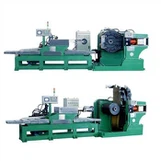
As a seasoned supplier of Timing Belt Machines, I've witnessed firsthand the remarkable evolution of this technology over the years. The question that often arises in our industry is, "Can a timing belt machine be upgraded in the future?" In this blog post, I'll delve into this topic, exploring the potential for future upgrades, the driving factors behind them, and the benefits they could bring to our customers.
The Current State of Timing Belt Machines
Before we can discuss future upgrades, it's essential to understand the current state of timing belt machines. These machines are crucial in the manufacturing process of timing belts, which are used in a wide range of applications, from automotive engines to industrial machinery. Modern timing belt machines are highly sophisticated, incorporating advanced technologies such as computer numerical control (CNC), precision cutting, and automated splicing.


Our company offers a variety of timing belt machines, including the Cutting Belt Forming Machine, Timing Belt Cutting Machine, and Cutting Splicing Machine. These machines are designed to provide high precision, efficiency, and reliability, meeting the demanding requirements of our customers.
Driving Factors for Future Upgrades
Several factors are driving the need for future upgrades to timing belt machines. One of the primary drivers is the increasing demand for higher precision and quality in timing belt manufacturing. As industries become more advanced, the requirements for timing belts are becoming more stringent. For example, in the automotive industry, timing belts need to be more accurate and durable to ensure the smooth operation of engines. Upgrading timing belt machines can help manufacturers meet these higher standards.
Another driving factor is the need for increased efficiency and productivity. In today's competitive market, manufacturers are constantly looking for ways to reduce production costs and increase output. Upgrading timing belt machines with advanced automation and control systems can significantly improve the speed and accuracy of the manufacturing process, leading to higher productivity and lower costs.
Technological advancements are also playing a crucial role in driving future upgrades. New materials, sensors, and control algorithms are constantly being developed, which can be integrated into timing belt machines to enhance their performance. For example, the use of advanced sensors can enable real-time monitoring of the manufacturing process, allowing for immediate adjustments and quality control.
Potential Upgrades for Timing Belt Machines
Based on the driving factors mentioned above, there are several potential upgrades that could be implemented in timing belt machines in the future.
Advanced Control Systems
One of the most significant upgrades could be the implementation of more advanced control systems. Current control systems are already quite sophisticated, but there is still room for improvement. Future control systems could incorporate artificial intelligence (AI) and machine learning algorithms to optimize the manufacturing process. These algorithms could analyze data from sensors in real-time, making adjustments to the machine's parameters to ensure the highest quality and efficiency.
Improved Cutting and Splicing Technologies
Cutting and splicing are critical processes in timing belt manufacturing. Future upgrades could focus on improving the precision and speed of these processes. For example, new cutting technologies could be developed to reduce the amount of waste and improve the edge quality of the belts. Similarly, splicing technologies could be enhanced to provide stronger and more reliable joints.
Integration of Internet of Things (IoT)
The integration of IoT technology could bring significant benefits to timing belt machines. IoT-enabled machines could be connected to a network, allowing for remote monitoring and control. Manufacturers could access real-time data on the machine's performance, such as temperature, pressure, and vibration, from anywhere in the world. This would enable proactive maintenance, reducing downtime and improving overall productivity.
Enhanced Safety Features
Safety is always a top priority in manufacturing. Future upgrades could include the addition of enhanced safety features to timing belt machines. For example, new sensors could be installed to detect potential hazards, such as overheating or abnormal vibrations. These sensors could trigger automatic shutdowns to prevent accidents and protect the operators.
Benefits of Upgrading Timing Belt Machines
Upgrading timing belt machines can bring several benefits to manufacturers. Firstly, it can improve the quality of the timing belts produced. Higher precision and better control over the manufacturing process can result in belts that are more accurate, durable, and reliable. This can lead to increased customer satisfaction and a competitive edge in the market.
Secondly, upgrading can increase productivity and efficiency. Advanced automation and control systems can reduce the time required for setup and changeovers, as well as improve the speed of the manufacturing process. This can result in higher output and lower production costs.
Thirdly, upgrading can enhance the flexibility of the manufacturing process. With more advanced control systems, machines can be easily reconfigured to produce different types and sizes of timing belts. This allows manufacturers to respond quickly to changes in customer demand.
Conclusion
In conclusion, the answer to the question "Can a timing belt machine be upgraded in the future?" is a resounding yes. The driving factors of increasing precision requirements, the need for efficiency, and technological advancements all point to the potential for significant upgrades in the future. These upgrades can bring numerous benefits to manufacturers, including improved quality, increased productivity, and enhanced flexibility.
As a Timing Belt Machine supplier, we are committed to staying at the forefront of technological innovation. We are constantly researching and developing new upgrades to our machines to meet the evolving needs of our customers. If you are interested in learning more about our timing belt machines or exploring potential upgrades, we encourage you to contact us for a detailed discussion. Our team of experts is ready to assist you in finding the best solutions for your manufacturing needs.
References
- Industry reports on the development of timing belt manufacturing technology.
- Research papers on advanced control systems and IoT in manufacturing.
- Technical specifications of current and emerging materials for timing belt production.