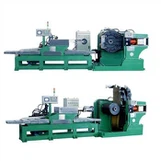
Hey there! I'm a supplier of curing molds, and today I'm super excited to share with you the design principles of a curing mold. Whether you're in the manufacturing business or just curious about how these nifty tools are made, this blog post will give you the lowdown on what goes into creating a top - notch curing mold.
1. Functionality Comes First
The most important thing when designing a curing mold is to make sure it does its job. For instance, if it's a mold for making v - belts, it has to precisely shape the belt to the right dimensions and surface characteristics. We're talking about getting the width, thickness, and the profile of the belt spot - on.
Let's take a look at different types of v - belt molds. The Autoclave Jacket is designed to handle the high - pressure and high - temperature environment of an autoclave process. It needs to be strong enough to withstand the forces during the curing process without deforming. Meanwhile, the Smooth Die is focused on creating a smooth surface on the v - belt. This means the interior of the mold has to be polished to a high degree to transfer that smooth finish to the final product. And then there's the Cog Mold, which is all about creating those precise cogs on the belt. The teeth of the mold have to be accurately machined so that the cogs on the belt are uniform and well - formed.
2. Material Selection is Key
The choice of material for the curing mold can make or break its performance. We usually go for materials that are strong, heat - resistant, and have good wear resistance. Metals like steel are a popular choice because they can handle the high temperatures and pressures involved in the curing process.
Steel molds are also great because they can be machined to very high precision. This is crucial for getting those detailed shapes and accurate dimensions we talked about earlier. However, we also need to consider the cost of the material. Sometimes, we might use other alloys or composite materials that offer a good balance between performance and cost.
Another factor to think about is how the material interacts with the substance being cured. For example, if we're curing rubber, the mold material shouldn't react with the rubber chemically. Otherwise, it could affect the quality of the final product.
3. Ease of Use and Maintenance
A well - designed curing mold should be easy to use and maintain. This means it should be easy to load and unload the material being cured. The mold should have a simple and intuitive design that allows operators to handle it without a lot of hassle.
For maintenance, the mold should be easy to clean. Residue from the curing process can build up on the mold over time, and if it's difficult to clean, it can affect the quality of the next batch of products. So, we design molds with smooth surfaces and accessible areas to make cleaning a breeze.
Also, if parts of the mold need to be replaced due to wear and tear, it should be a straightforward process. We try to use modular designs whenever possible, so that individual parts can be easily swapped out without having to replace the whole mold.
4. Precision and Tolerance
Precision is everything when it comes to curing molds. Even the slightest deviation from the required dimensions can result in a defective product. That's why we pay extra attention to the machining process. We use advanced CNC machines to ensure that the mold is made to the exact specifications.
Tolerance is another important concept. Tolerance refers to the allowable variation in the dimensions of the mold. Different applications require different levels of tolerance. For high - precision products, we need to keep the tolerance very tight. For example, in the aerospace industry, where v - belts are used in critical applications, the tolerance requirements are extremely strict.
5. Thermal Management
The curing process often involves heat, and how the mold manages that heat is crucial. A good curing mold should have uniform heat distribution. This ensures that the material being cured hardens evenly, preventing defects like warping or uneven curing.
To achieve uniform heat distribution, we might use features like internal channels in the mold. These channels can carry a heating or cooling fluid, which helps to regulate the temperature of the mold. We also need to consider the thermal expansion of the mold material. Different materials expand and contract at different rates when heated and cooled. So, we have to design the mold in a way that compensates for this thermal expansion to avoid cracks or dimensional changes.


6. Safety Considerations
Safety is not something we can afford to overlook. The curing mold should be designed in a way that minimizes the risk of accidents. For example, the edges of the mold should be smooth and rounded to prevent cuts. If the mold is heavy, it should have appropriate lifting points or handles to make it safer to move around.
We also need to think about the safety of the operators during the curing process. If the mold is used in a high - pressure or high - temperature environment, it should be equipped with safety features like pressure relief valves and temperature sensors to prevent over - pressurization and over - heating.
7. Cost - Effectiveness
At the end of the day, we need to make sure that the design of the curing mold is cost - effective. This doesn't mean cutting corners on quality, but rather finding ways to optimize the design to reduce costs without sacrificing performance.
We can do this by using materials that are cost - efficient, streamlining the manufacturing process, and designing the mold for long - term use. A mold that has a longer lifespan means less frequent replacement, which can save a lot of money in the long run.
Let's Connect!
If you're in need of a high - quality curing mold, I'd love to talk to you. Whether you have a specific design in mind or need some advice on what kind of mold would work best for your application, I'm here to help. Reach out to me and let's start a conversation about how we can create the perfect curing mold for you.
References
- "Mold Design Handbook"
- "Advanced Materials for Mold Making"
- Industry research papers on v - belt manufacturing and mold technology