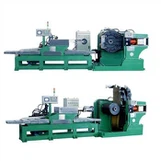
The hardness of a V Groove Die is a critical factor that significantly influences its performance, durability, and suitability for various applications. As a prominent V Groove Die supplier, I have witnessed firsthand how understanding this concept can help customers make informed decisions when selecting the right die for their needs.
Understanding the Concept of Hardness in V Groove Dies
Hardness, in the context of V Groove Dies, refers to the material's resistance to indentation, wear, and deformation. It is a measure of how well the die can maintain its shape and integrity under the stresses and forces encountered during the manufacturing process. A die with appropriate hardness will ensure consistent and accurate V - groove formation, leading to high - quality end products.
There are several methods to measure the hardness of a V Groove Die. One of the most commonly used is the Rockwell hardness test. This test involves indenting the material with a specific indenter under a predefined load and measuring the depth of the indentation. The Rockwell hardness number (HRA, HRB, HRC, etc.) provides a quantitative value that indicates the material's hardness. Another popular method is the Brinell hardness test, which uses a spherical indenter and measures the diameter of the indentation after a specific load is applied.
Importance of Hardness in V Groove Die Performance
- Wear Resistance: In V - groove die applications, the die is constantly in contact with the workpiece, which can cause abrasion and wear over time. A die with high hardness is more resistant to wear, meaning it can maintain its sharp edges and precise V - groove dimensions for a longer period. This results in fewer replacements and reduced production downtime, ultimately saving costs for the manufacturing process.
- Dimensional Stability: During the forming process, the V Groove Die is subjected to high pressures and temperatures. A die with the right hardness will resist deformation, ensuring that the V - grooves it creates have consistent dimensions. This is crucial for applications where tight tolerances are required, such as in the automotive and aerospace industries.
- Tool Life: Hardness directly impacts the tool life of a V Groove Die. A harder die can withstand more cycles of operation before it needs to be replaced. This is especially important in high - volume production environments, where a longer tool life can significantly improve productivity and reduce the overall cost per part.
Factors Affecting the Hardness of V Groove Dies
- Material Selection: The choice of material for the V Groove Die is the primary factor influencing its hardness. Common materials used for V Groove Dies include tool steels, carbide, and ceramics. Tool steels, such as D2, A2, and H13, offer a good balance of hardness, toughness, and machinability. Carbide is extremely hard and offers excellent wear resistance, making it suitable for high - performance applications. Ceramics, on the other hand, have very high hardness but are more brittle and require careful handling.
- Heat Treatment: Heat treatment processes, such as quenching and tempering, can significantly alter the hardness of a V Groove Die. Quenching involves rapidly cooling the die from a high temperature, which increases its hardness but also makes it more brittle. Tempering is then used to reduce the brittleness and improve the die's toughness while maintaining a high level of hardness.
- Manufacturing Process: The manufacturing process can also affect the hardness of the V Groove Die. Precision machining, grinding, and surface finishing operations can introduce residual stresses in the die, which may impact its hardness and performance. Proper manufacturing techniques, such as stress - relieving heat treatments, can help minimize these effects.
Matching Hardness to Application Requirements
- Low - Volume Production: For low - volume production runs, a V Groove Die with moderate hardness may be sufficient. Tool steels with a Rockwell hardness in the range of 50 - 55 HRC can provide a good balance between cost and performance. These dies are relatively easy to machine and can be quickly replaced if necessary.
- High - Volume Production: In high - volume production, where the die is subjected to a large number of cycles, a harder die is required. Carbide dies, with a hardness of over 90 HRA, are often the preferred choice due to their excellent wear resistance and long tool life. However, they are more expensive and require specialized machining and handling.
- Specialized Applications: Some applications, such as those involving hard or abrasive materials, may require dies with extremely high hardness. Ceramics or advanced high - speed steels can be used in these cases. Additionally, for applications where the die needs to operate at high temperatures, materials with good heat - resistant properties and high hardness, such as H13 tool steel, are recommended.
Our Offerings as a V Groove Die Supplier
As a V Groove Die supplier, we understand the importance of hardness in meeting our customers' specific needs. We offer a wide range of V Groove Dies made from different materials, each with its own unique hardness characteristics. Our team of experts can assist customers in selecting the right die based on their application requirements, production volume, and budget.
We also provide value - added services such as heat treatment and surface finishing to optimize the hardness and performance of our V Groove Dies. Whether you need a standard die or a custom - designed solution, we have the capabilities to deliver high - quality products that meet your exact specifications.
In addition to V Groove Dies, we also offer related products such as Curing Mold, Autoclave Jacket, and Cog Mold. These products are designed to work seamlessly with our V Groove Dies, providing a comprehensive solution for your manufacturing needs.
Conclusion
The hardness of a V Groove Die is a complex but crucial concept that plays a vital role in its performance and suitability for different applications. By understanding the factors that affect hardness, the importance of matching it to application requirements, and the options available from a reliable supplier, customers can make informed decisions that will improve the efficiency and quality of their manufacturing processes.


If you are in the market for a V Groove Die or related products, we invite you to contact us to discuss your specific needs. Our team of experts is ready to assist you in finding the right solution for your business. We look forward to the opportunity to work with you and help you achieve your production goals.
References
- Callister, W. D., & Rethwisch, D. G. (2017). Materials Science and Engineering: An Introduction. Wiley.
- Dieter, G. E. (1988). Mechanical Metallurgy. McGraw - Hill.
- Kalpakjian, S., & Schmid, S. R. (2013). Manufacturing Engineering and Technology. Pearson.