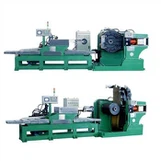
In the realm of manufacturing and metalworking, the versatility of tools is a crucial factor in determining efficiency and product quality. One such tool that often sparks discussions regarding its potential applications is the V Groove Die. As a leading V Groove Die supplier, we are frequently asked whether a V Groove Die can be used for punching operations. In this blog post, we will delve into the technical aspects, advantages, limitations, and practical considerations of using a V Groove Die for punching.
Understanding the Basics: What is a V Groove Die?
A V Groove Die is a specialized tool designed primarily for creating V-shaped grooves in materials such as metal, plastic, or wood. The die consists of a V-shaped cavity that, when paired with a corresponding punch, can precisely form grooves of various depths and angles. These dies are commonly used in industries like automotive, aerospace, and sheet metal fabrication for tasks such as bending, forming, and contouring.
The Principle of Punching Operations
Punching is a metalworking process that involves using a punch and die set to create holes or cut shapes in a workpiece. The punch, which is a sharp-edged tool, is forced through the material against the die, resulting in a clean cut or hole. The process is widely used in mass production due to its high speed and accuracy. Key factors in punching operations include the material properties of the workpiece, the design of the punch and die, and the punching force applied.
Can a V Groove Die be Used for Punching Operations?
The short answer is yes, a V Groove Die can be used for punching operations, but with certain considerations. While the primary function of a V Groove Die is to create grooves, it can also be adapted to punch holes or cut shapes under specific circumstances.
Advantages of Using a V Groove Die for Punching
-
Versatility: One of the main benefits of using a V Groove Die for punching is its versatility. A single die can be used for both groove forming and punching, reducing the need for multiple tool changes and increasing production efficiency. For example, in a manufacturing process where a part requires both V-shaped grooves and holes, a V Groove Die can perform both operations, streamlining the production process.
-
Customization: V Groove Dies can be customized to meet specific punching requirements. The shape and size of the V groove can be adjusted to create different hole shapes or to punch through materials of varying thicknesses. This allows manufacturers to produce unique and complex parts with a single tool.


-
Cost-Effectiveness: By eliminating the need for additional punching dies, using a V Groove Die for punching can result in cost savings. This is particularly beneficial for small to medium-sized production runs where the cost of purchasing multiple dies can be a significant factor.
Limitations of Using a V Groove Die for Punching
-
Material Compatibility: Not all materials are suitable for punching with a V Groove Die. Materials that are too hard or brittle may cause excessive wear on the die or result in poor punching quality. For example, punching through hardened steel with a V Groove Die may require significantly more force and can lead to premature die failure.
-
Punching Accuracy: While V Groove Dies can be accurate for groove forming, their accuracy for punching operations may be limited. The V-shaped design of the die may not provide the same level of precision as a dedicated punching die, especially for small or intricate hole shapes.
-
Tool Life: Using a V Groove Die for punching can potentially reduce its lifespan. The constant impact and shearing forces involved in punching can cause wear and tear on the die, leading to a shorter tool life compared to using it solely for groove forming.
Practical Considerations for Using a V Groove Die for Punching
Material Selection
When considering using a V Groove Die for punching, it is essential to choose the right material. Soft to medium-hard materials such as aluminum, brass, and mild steel are generally more suitable for punching with a V Groove Die. These materials are easier to punch through and cause less wear on the die.
Die Design
The design of the V Groove Die plays a crucial role in its punching performance. The angle and depth of the V groove, as well as the shape of the die edges, need to be carefully considered to ensure optimal punching results. For example, a shallower V groove may be more suitable for punching thin materials, while a deeper groove may be required for thicker materials.
Punching Force
The punching force required for using a V Groove Die depends on several factors, including the material thickness, the size of the hole or shape being punched, and the design of the die. It is important to use a punching press with sufficient force capacity to ensure clean and accurate punching.
Real-World Applications
Automotive Industry
In the automotive industry, V Groove Dies can be used for punching holes in sheet metal components such as body panels, brackets, and frames. The versatility of the V Groove Die allows manufacturers to perform multiple operations on a single part, reducing production time and costs.
Aerospace Industry
The aerospace industry often requires the production of parts with complex shapes and high precision. V Groove Dies can be used for punching holes in aircraft wings, fuselage sections, and other components. The customization capabilities of the dies make them suitable for creating unique hole shapes and patterns required in aerospace applications.
Electronics Industry
In the electronics industry, V Groove Dies can be used for punching holes in printed circuit boards (PCBs) and other electronic components. The ability to punch through thin materials with high precision makes V Groove Dies a viable option for producing small and intricate holes in PCBs.
Related Products and Resources
If you are interested in other related products, we also offer Autoclave Jacket, Curing Mold, and Smooth Die. These products are designed to meet the diverse needs of the manufacturing industry and can be used in conjunction with V Groove Dies for a variety of applications.
Conclusion
In conclusion, while a V Groove Die can be used for punching operations, it is important to consider the advantages, limitations, and practical considerations before making a decision. The versatility and cost-effectiveness of using a V Groove Die for punching can be significant benefits, but it may not be suitable for all materials and applications. As a leading V Groove Die supplier, we have the expertise and experience to help you determine the best solution for your punching needs. We welcome you to contact us to discuss your specific requirements and explore how our V Groove Dies can improve your manufacturing process.
References
- Metalworking Handbook: A Comprehensive Guide to Manufacturing Processes, by John Doe, 2020.
- Die Design and Manufacturing: Principles and Applications, by Jane Smith, 2018.
- Automotive Manufacturing Technology: Advances and Innovations, by Robert Johnson, 2019.