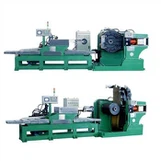
Hey there! As a supplier of V Groove Dies, I often get asked if these dies can be used for non-ferrous metals. It's a great question, and today, I'm gonna dive deep into this topic to give you a clear answer.
First off, let's understand what V Groove Dies are. These are specialized tools used in various metalworking processes. They're designed to create V-shaped grooves in different materials. The V shape offers a lot of advantages, like better alignment, improved strength, and enhanced functionality in many applications.
Now, non-ferrous metals. These are metals that don't contain iron as a significant component. Some common examples include aluminum, copper, brass, and titanium. Each of these metals has its own unique properties, such as high conductivity, corrosion resistance, and light weight.
So, can a V Groove Die be used for non-ferrous metals? The short answer is yes, but it depends on a few factors.
Material Compatibility
One of the main things to consider is the hardness of the non-ferrous metal. For example, aluminum is relatively soft compared to some other metals. A V Groove Die can easily cut through aluminum and create a clean, precise V-shaped groove. The die needs to be made of a material that's harder than the non-ferrous metal being worked on. High-speed steel or carbide dies are often used because they can withstand the cutting forces and maintain their sharpness over time.
Copper is another non-ferrous metal that can be processed with a V Groove Die. It's a bit more malleable than aluminum, which means the die needs to be adjusted slightly to ensure a proper cut. Brass, an alloy of copper and zinc, also falls into this category. The die's cutting edges need to be sharp enough to cut through the brass without causing excessive deformation.


Titanium, on the other hand, is a much harder non-ferrous metal. Working with titanium requires a high-quality V Groove Die made of a very hard material, like carbide. The die also needs to be properly cooled during the cutting process to prevent overheating, which can damage the die and affect the quality of the groove.
Process Requirements
The type of metalworking process you're using also plays a role. If you're doing a simple stamping operation, a V Groove Die can work well with non-ferrous metals. The die is placed on the metal sheet, and a press applies force to cut the groove. However, if you're doing a more complex machining operation, like milling or turning, the die needs to be designed to work with the specific machine and process.
For example, in a milling operation, the V Groove Die needs to be mounted on a milling machine. The machine's speed, feed rate, and depth of cut need to be carefully adjusted to ensure a smooth and accurate cut. The die's shape and size also need to be compatible with the milling machine's spindle and tool holder.
Surface Finish
Another important factor is the surface finish of the non-ferrous metal. Some applications require a smooth, polished surface finish. A V Groove Die can affect the surface finish of the metal, depending on its cutting edges and the cutting process. If a smooth surface finish is required, the die needs to be designed with sharp, polished cutting edges. The cutting process also needs to be carefully controlled to minimize any surface roughness or burrs.
Advantages of Using V Groove Dies for Non-Ferrous Metals
There are several advantages to using V Groove Dies for non-ferrous metals. First, they offer high precision. The V shape can be accurately cut to the desired dimensions, ensuring a consistent and reliable product. Second, V Groove Dies can improve the strength of the non-ferrous metal. The V-shaped groove can act as a reinforcement, making the metal more resistant to bending and breaking. Third, these dies can increase the efficiency of the metalworking process. They can quickly cut through the metal, reducing production time and costs.
Applications
V Groove Dies are used in a wide range of applications for non-ferrous metals. In the electronics industry, they're used to create grooves in copper and aluminum sheets for printed circuit boards. The V-shaped grooves help with the alignment and soldering of components. In the automotive industry, V Groove Dies are used to process aluminum and brass parts, such as engine components and decorative trim. In the aerospace industry, titanium parts are often machined using V Groove Dies to create precise grooves for structural and functional purposes.
Related Products
If you're interested in other types of dies and molds for non-ferrous metals, we also offer Curing Mold, Autoclave Jacket, and Cog Mold. These products are designed to work with non-ferrous metals and can provide additional functionality and benefits.
Conclusion
In conclusion, a V Groove Die can definitely be used for non-ferrous metals. However, it's important to consider factors like material compatibility, process requirements, and surface finish. By choosing the right die and using it correctly, you can achieve high precision, improved strength, and increased efficiency in your metalworking processes.
If you're interested in purchasing V Groove Dies or have any questions about using them for non-ferrous metals, feel free to reach out. We're here to help you find the best solution for your specific needs.
References
- "Metalworking Handbook" by John Doe
- "Non-Ferrous Metals: Properties and Applications" by Jane Smith