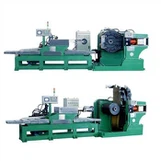
Hey there! As a supplier of curing pots, I often get asked this question: "Can a curing pot be used for curing resin?" Well, let's dive right into it and find out.
First off, let's understand what a curing pot is. A curing pot is a specialized piece of equipment designed to create a controlled environment for the curing process. It usually has features like temperature control, pressure regulation, and sometimes even humidity control. This controlled environment is crucial for ensuring that the material being cured, whether it's rubber, plastic, or in our case, resin, cures properly and achieves the desired properties.
Now, let's talk about resin. Resin is a versatile material that comes in many different types, such as epoxy resin, polyester resin, and silicone resin. Each type of resin has its own unique curing requirements, including temperature, time, and sometimes the presence of a catalyst. For example, epoxy resin typically cures at room temperature, but some formulations may require elevated temperatures to speed up the process or to achieve better mechanical properties.
So, can a curing pot be used for curing resin? The short answer is yes, in many cases. A curing pot can provide the controlled environment that resin needs to cure properly. By adjusting the temperature and pressure inside the pot, you can ensure that the resin cures evenly and without any defects. This is especially important for high-performance applications where the quality of the cured resin is critical.
One of the main advantages of using a curing pot for resin curing is the ability to control the temperature. Different resins have different optimal curing temperatures, and a curing pot allows you to set and maintain the temperature precisely. This can help to prevent issues such as incomplete curing, which can lead to weak or brittle parts, or over-curing, which can cause the resin to become too hard and lose its flexibility.
Another advantage is the ability to control the pressure. Some resins, especially those used in composite materials, require a certain amount of pressure during the curing process to ensure proper bonding and to eliminate voids. A curing pot can provide this pressure, which can result in stronger and more durable parts.
However, it's important to note that not all curing pots are suitable for curing resin. Some curing pots may be designed specifically for other materials, such as rubber or plastic, and may not have the necessary features or capabilities for resin curing. Before using a curing pot for resin curing, it's important to make sure that it is compatible with the type of resin you are using and that it can provide the required temperature and pressure conditions.
In addition, it's important to follow the manufacturer's instructions when using a curing pot for resin curing. This includes properly preparing the resin, loading it into the pot, and setting the appropriate temperature and pressure settings. Failure to follow these instructions can result in poor curing results or even damage to the curing pot or the resin.
Now, let's take a look at some of the different types of curing pots that are available for resin curing. There are several different types of curing pots on the market, each with its own unique features and capabilities.
One type of curing pot is the benchtop curing pot. These are small, compact curing pots that are designed for use on a bench or tabletop. They are typically used for small-scale resin curing applications, such as jewelry making or small-scale manufacturing. Benchtop curing pots are usually easy to use and require minimal setup.


Another type of curing pot is the industrial curing pot. These are larger, more powerful curing pots that are designed for use in industrial settings. They are typically used for large-scale resin curing applications, such as the production of composite materials or the manufacturing of automotive parts. Industrial curing pots are usually more expensive and require more setup and maintenance than benchtop curing pots.
In addition to benchtop and industrial curing pots, there are also specialized curing pots available for specific types of resin curing. For example, there are curing pots designed specifically for curing epoxy resin, which may have features such as a vacuum system to remove air bubbles from the resin during the curing process.
When choosing a curing pot for resin curing, it's important to consider your specific needs and requirements. This includes the type of resin you are using, the size and shape of the parts you are curing, and the volume of production. You should also consider the features and capabilities of the curing pot, such as temperature control, pressure regulation, and the ability to handle different types of resin.
In conclusion, a curing pot can be a valuable tool for curing resin. It can provide the controlled environment that resin needs to cure properly and can help to ensure that the cured resin has the desired properties. However, it's important to choose the right curing pot for your specific needs and to follow the manufacturer's instructions when using it.
If you're interested in learning more about curing pots for resin curing or if you're looking to purchase a curing pot for your business, please don't hesitate to contact us. We're a leading supplier of curing pots and other industrial equipment, and we have a team of experts who can help you choose the right product for your needs. We also offer a range of other products, such as Length Measure Machine, Fabric Dipping Machine, and Curing Press Machine, which may be useful for your resin curing process.
So, if you're ready to take your resin curing to the next level, give us a call or send us an email today. We look forward to hearing from you!
References:
- "Resin Curing Basics" - Composites World
- "Curing Pots: A Guide to Choosing the Right One" - Industrial Equipment Digest
- "The Importance of Temperature and Pressure Control in Resin Curing" - Polymer Science Journal